
The Row Bags: Frequently Asked Questions
Here are the most frequently asked questions about the row bags, answered using what can actually be verified. Since the brand publishes no price list, every figure here is an observed 2026 market price recorded in September of that year. Reported but unconfirmed claims are named as such, not papered over. Any number coming out of a resale report is observed market behaviour, not investment advice. Ready-to-wear and footwear are outside the scope; only bags are covered. Claims that circulate widely but cannot be checked have been left out.
Who is behind The Row, and where are the bags made?
Founded in 2006 by Mary-Kate and Ashley Olsen, The Row is based in New York City. The design studio has been in Tribeca since 2012, alongside a Paris office opened in 2011 and a London office in 2019. London’s Savile Row lends the name. Bags are made in Italy, and the brand states Made in Italy on its own product pages for the Half Moon, Soft Margaux 10 and 12, Margaux Shoulder 12, Bourse Clutch, Terrasse To-Go and Large Slouchy Banana. Beyond that, no manufacturing detail is published, and claims about specific tanneries are not verifiable. Los Angeles, New York, London, Paris and Amagansett each have an own-name boutique.
Why do the bags carry no logo?
You will find no exterior logo plaques, branded hardware or monogram prints anywhere on the range. Silhouette, proportion and construction do the identifying instead. Look low on the side of any bag for a small, discreet exterior stamp that blends into the leather, and expect a second stamp inside. Fittings is palladium-plated in a matte or brushed finish, reading as weight rather than shine. Linings are luxury materials in their own right, using nappa, lambskin, calfskin and cotton herringbone where other houses print logo jacquard. Nobody will recognise the bag from saint laurent the other side of the road, which is the whole attraction for many buyers.
What does a The Row bag cost?
Because the brand publishes no price list, every figure here is an observed 2026 market price rather than an official one. The observed range went from $590 for a Double Travel Wallet up to $6,900 for the Marco Bag. Work in three bands: entry, roughly $590 to $1,500; middle, roughly $1,550 to $3,500; top, roughly $3,600 to $6,900. Size matters less than material when it comes to the number. On the same silhouette, suede reliably costs more than calfskin. Retailer prices vary, and stock, currency and season all shift the figure, so read the table as a snapshot rather than a quotation.
| Price band | 2026 observed range | Example models |
|---|---|---|
| Entry | $590 up to $1,500 | Boone Tote $900, Double Travel Wallet $590, 90’s Bag $1,090, Half Moon $1,390, N/S Park Crossbody $1,290 |
| Middle | $1,550–$3,500 | Alix $1,900, Large Slouchy Banana $2,550, Peggy Clutch $2,900, Bourse Clutch $1,590, Park totes in all sizes |
| Top | $3,600 up to $6,900 | Marco Bag $6,900, Margaux Shoulder 12 $4,900, Alger Tote $4,900, Agnes 12 $4,400, Soft Margaux 10 $3,650 |
| Suede premium | Silhouette-dependent | India 10.00 leather $3,850 versus suede $5,370; Agnes 15 $5,000 versus $5,800 |
Is the original Margaux gone for good?
No one outside the company knows, and the brand has not said. Two things are verified: the Margaux was pulled from third-party retailers during 2025, and the brand’s own site now shows the Soft Margaux and the Margaux Shoulder in place of the original. Discontinuation itself is widely reported but has never been officially confirmed by the brand. Those two claims are distinct, and any article conflating them goes beyond the evidence. The original now changes hands on the secondary market, where the Margaux 15 reported reselling at around $4,350 to $6,000 and above in early 2026. Absent word from the brand, treat the question as open.
Margaux or Soft Margaux, what actually changes?
What you have here is a reworking, not a rename. Against the original, it adds protective metal feet, an interior toggle closure, belted side gussets, a zip pocket and card slots. Soft Margaux 10 came in at $3,650 in 100% calfskin with a cotton herringbone lining, 10 x 7 x 7.5 inches, a 5-inch handle drop, palladium-plated hardware, a removable shoulder strap and one card slot, Made in Italy. At $4,350, the Soft Margaux 12 keeps the same construction, at 12 x 9 x 7.5 inches with two card slots and a zip pocket. A Soft Margaux 15 is reported at about $4,700, but that figure is unconfirmed. Margaux Shoulder 12, observed at $4,900, is a separate shape with a lambskin lining and elongated tubular handles.
Why do the model names have numbers in them?
The number is the bag’s width in inches, not a size tier or a series code. The convention holds across Margaux 10, 12, 15 and 17, India 10.00, 12.00 and 15.75, Agnes 12 and 15, Sofia 8.75 and 10, and Marlo 12 and 14. Because two bags sharing a number occupy roughly the same width, comparing them is unusually easy. The Margaux 17 exists in a leather-and-canvas version at a major retailer, approximately 17 x 12 x 9 inches, though its price is not verified. Where a name carries N/S or E/W instead, that describes orientation rather than dimension. Learning both conventions tells you most of what you need before seeing the bag.
How do you authenticate a The Row bag?
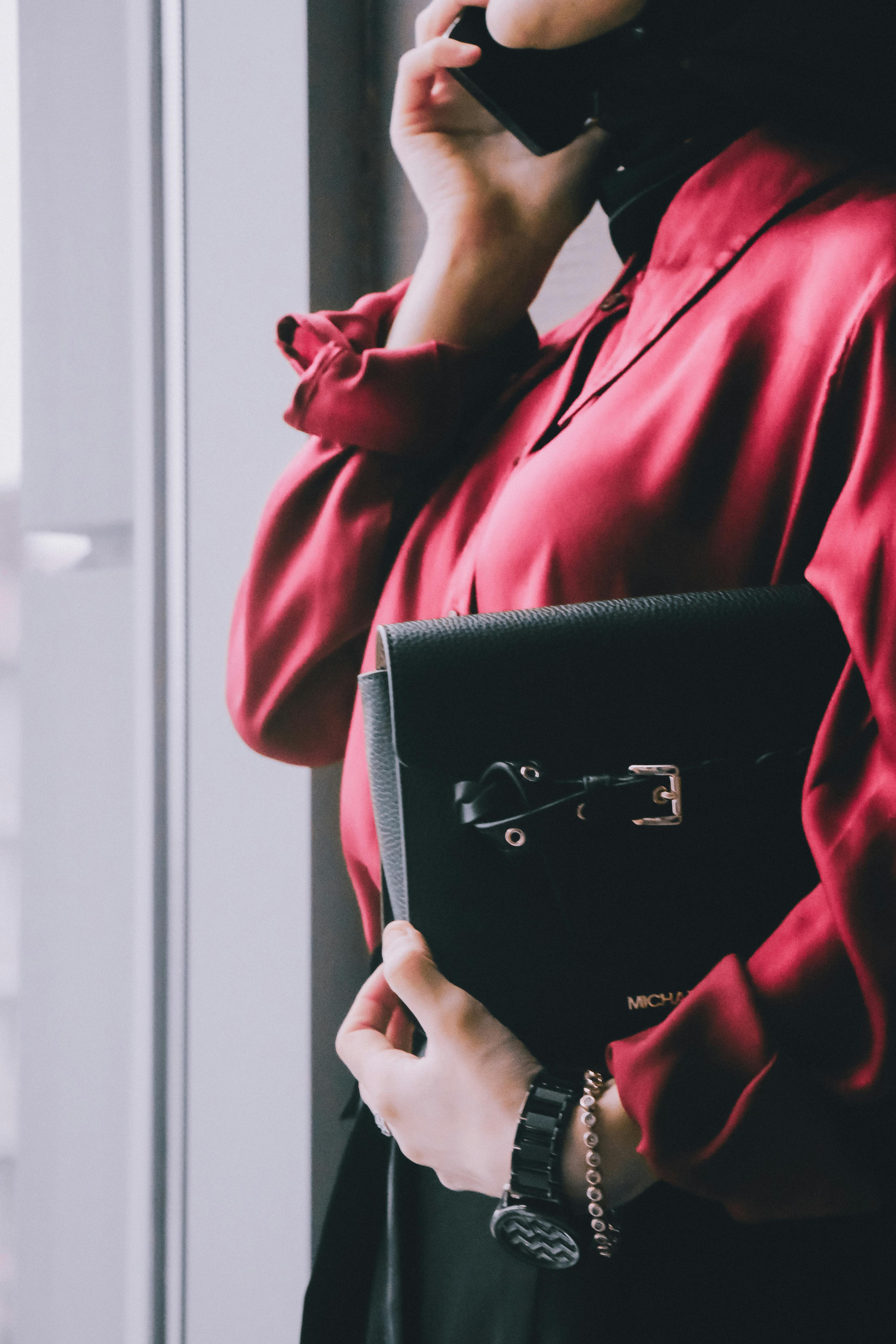
There is no public serial number, date code or authenticity card system for these bags, so there is no code to look up and nobody can verify one for you. In its place, authentication happens in the hand. Even, machine-precise stitching with no fraying or wandering lines is what you want, as are hand-painted edges with no overflow, bubbling or thin coverage. Genuine hide feels substantial and soft at once and absorbs light rather than reflecting it, while fakes feel stiff, thin or faintly plasticky. A crisp, centred interior stamp reading the logo and Made in Italy is the norm, and the Margaux carries engraving on its buckles and base feet. Counterfeits reported through 2024 and 2025 get past photographs, so in-hand checks and platform authentication are what sources recommend.
- There are no serial numbers, no date codes and no authenticity cards
- Evenly dense stitching plus tidy hand-painted edges
- Crisp, centred interior stamp reading Made in Italy
- Brushed or matte hardware and a precise action on closing
- A silhouette that stays put with nothing inside
Do The Row bags hold their value?
On observed market behaviour they have, though this is not investment advice and past figures forecast nothing. 97% value retention is the number the Rebag CLAIR 2025 report gave the brand, taking it into the unicorn tier of 85% and above for the first time, behind only Telfar, Hermes and Goyard. Results by model spread: 146% for the N/S Park Tote, the report’s strongest, 107% for the Margaux Tote and 106% for the Half Moon shoulder. Compare that with the same report’s Hermes Kelly Mini II at 282% and Goyard at 123%. Softer figures include Fashionphile resale reported up about 44% year over year. Nothing here is uniform: black and neutral calfskin hold the value, while canvas, nylon, sisal and seasonal colours discount.
Where are The Row bags sold?
Direct purchase means the brand’s own webstore or its boutiques in Los Angeles, New York, London, Paris and Amagansett. Multi-brand retailers verified as stocking the bags include Bergdorf Goodman, Neiman Marcus, Net-a-Porter, Mytheresa, FARFETCH, FWRD, SSENSE, Selfridges, Moda Operandi and Cettire, plus independents such as A’maree’s and Savannahs. For off-price and archive stock, The Outnet is where discontinued styles often surface. Rebag, The RealReal, Fashionphile, Vestiaire Collective, 1stDibs, Madison Avenue Couture and Future Reference all trade them on the secondary market. You will also find them on Poshmark, eBay and Mercari, though sources flag the first two as higher counterfeit risk. Anyone searching for the row for sale should note that at least one non-official site uses the brand’s name, so confirm you are on the brand’s own store before buying direct.
How should I care for one?
The guidance below is material-appropriate and general, not instruction from the label, because no brand-issued care protocol exists. Across all materials, avoid overfilling, keep the bag out of direct sunlight, heat and rain, and store it in its dust bag lightly stuffed so it holds shape. Calfskin and grained finishes respond to buffing with a soft dry cloth, with neutral conditioner used sparingly. Nappa and lambskin, which appear mostly as linings, are exceptionally soft and mark easily, so use a dry cloth and avoid over-conditioning. Suede is the most fragile material in the line and takes a suede brush only, with no leather cream, wet wipes, soap or water-based cleaner. Raffia, sisal, canvas and silk or satin pieces spot-clean but are least forgiving to water and least serviceable.